
Make future access easier to discuss
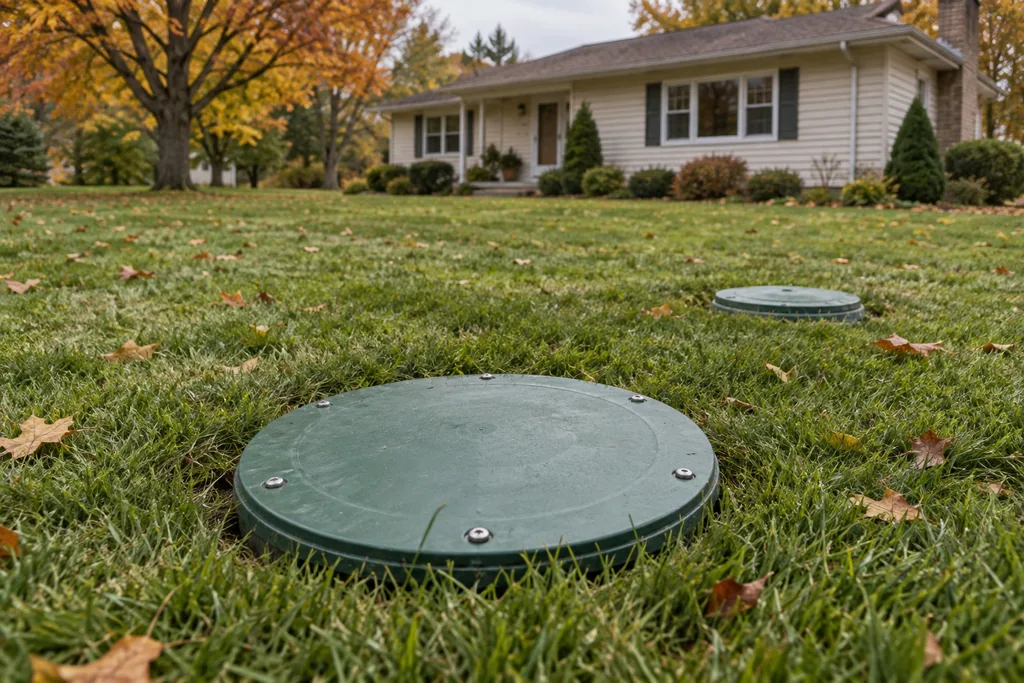
A properly installed riser improves surface access to the tank. It does not change wastewater treatment and is not a repair for a system backing up, draining slowly, or showing wet ground. Those symptoms need assessment because none alone proves which component failed.
A riser is a secured vertical extension from the tank lid to near grade. It can make locating, pumping, and inspection easier when access is buried. It is separate from repairs to tank, drainfield, or pump.
- Access improvement, not a treatment fix.
- Makes future locating, pumping, and inspection easier when access is buried.
- Separate from tank, drainfield, and pump repairs.
- No cost saving is guaranteed; quote reflects site conditions and work.
What the installer needs to assess
A written quote starts with questions about your site, existing tank, and finished access point.
- Whether tank can be located and safely exposed for work; see septic tank locating.
- Depth from grade to tank lid and required riser height.
- Condition and material of existing tank and lid.
- Whether riser unit and cover fit the tank opening and meet current requirements.
- Setback and location relative to home, driveways, plants, and property lines.
- How finished cover will sit: flush, slightly raised, secured, and kept closed between service visits.
- What installation includes: excavation, backfill, riser and lid, spoil disposal, surface restoration.
- Whether permits or county review apply, and who confirms with local health department.
- Written scope and warranty terms the contractor provides.
Coordinate locating and scheduled service
Riser work often pairs with finding the tank and routine service. Locating and installation are separate steps: locating finds the access point; the riser improves it. Neither is a treatment fix.
- Ask what locating is included before installation and how the tank will be confirmed.
- If pumping or inspection is due, say so when you request the quote so visits can be planned in a sensible order.
- Confirm in one document whether the quote covers locating, installation, backfill, surface restoration and any permit step.
- Ask whether combining visits affects the price rather than assuming it does.
Keep access secure
The cover is a safety feature. It should remain closed and secured so children, pets, and anyone near the tank cannot fall in.
Never open the tank yourself, and do not allow untrained people to enter it. Tank entry, clearing, repairs, and cover handling are professional work.
Pumping intervals vary with household use, tank size, measured solids, and system type.
EPA describes typical household pumping every 3-5 years and professional inspection at least every 3 years; these are different schedules and depend on the system.
If you do not know the last pumping date, treat it as unknown and ask for assessment rather than assuming the system is overdue or fine.
For ongoing care routines beyond riser installation, see septic system maintenance.