
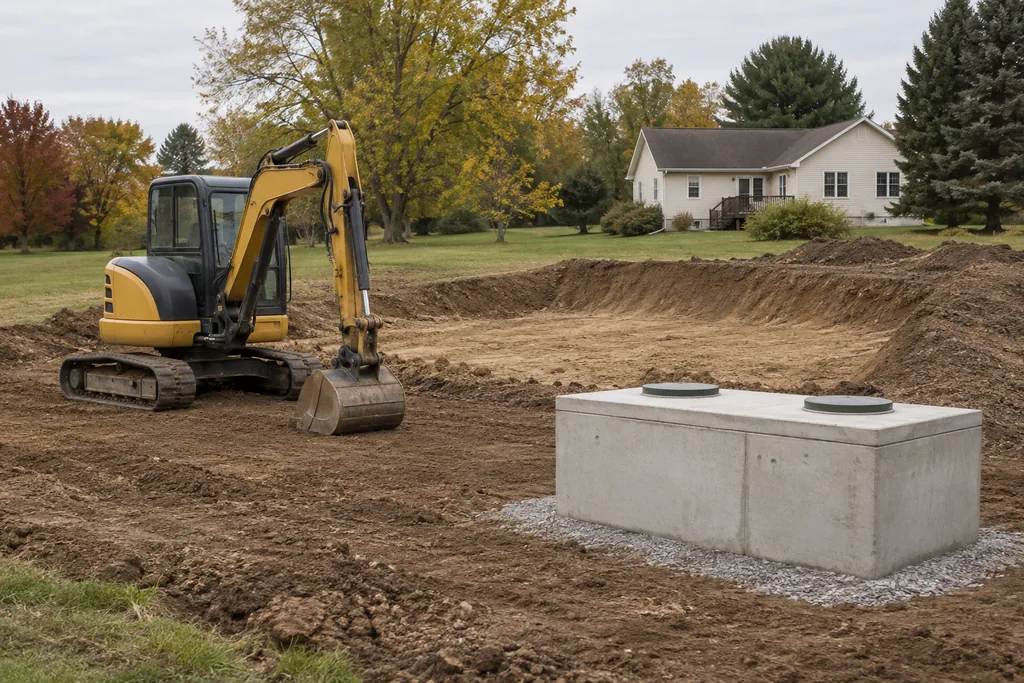
Wet ground is a reason to investigate
Wet or soft ground, backups, gurgling, slow drains, or odors near the drainfield all merit assessment. No single symptom proves which component failed; the tank, pump, piping, and soil treatment area can produce similar signs.
Keep people and pets away from affected ground and avoid contact with sewage. Contact a qualified professional promptly. A site evaluation identifies the condition; this page helps you prepare and understand what may follow.
Why the field matters
A conventional system separates solids in the tank and passes liquid effluent to the drainfield, where soil treats it. Pumping removes accumulated tank material; it does not restore soil that has stopped treating effluent. Tank service and soil treatment are separate.
- Tank: holds and separates solids so effluent can flow on.
- Effluent line: carries liquid from the tank toward the field.
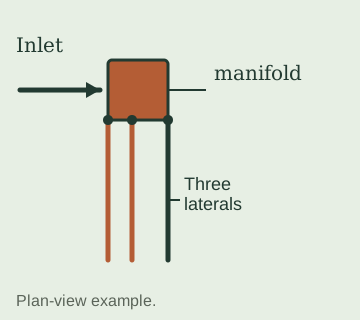
- Distribution: spreads effluent across the soil treatment area.
- Soil: absorbs and treats effluent within the drainfield area.
What an assessment needs to establish
A useful evaluation answers specific questions rather than jumping to a fix.
- Condition of the tank, effluent path, and soil treatment area.
- Whether other components, such as pump, risers, or distribution piping, show known issues.
- Household water use and anything unusual entering the system.
- Site constraints: space, slope, setbacks, accessibility.
- Existing records, drawings, or past service information.
- Available options and limits; no remedy is guaranteed.
Compare repair and replacement options
Approved professional findings determine viable options, and Elkhart County reviews onsite system work. Repair or replacement procedure differs from new construction. Confirm the project-specific path with the Elkhart County Health Department. The comparison below is general.
| Consideration | Repair | Replacement |
|---|---|---|
| Scope | Targets specific failed or damaged field or distribution parts. | Rebuilds or reconfigures the soil treatment area. |
| When it fits | Limited, addressable damage and surrounding field still functions. | Treatment area broadly lost or site conditions rule out a smaller fix. |
| County review | Repair path applies; soil investigation may be by county staff or registered soil scientist. | Replacement path applies; existing records, application, and parcel determine requirements. |
| Restoration | Disturbed ground and landscaping restored after work. | Larger footprint of disturbance; restoration follows completion. |
| Records | Update service records and drawings after work. | Update drawings and records for the new system. |
Protect the area while arranging help
Keep vehicles, trailers, and heavy equipment off the drainfield and reserve area. Moderate water use and keep unsuitable items out of drains while arranging service. Do not excavate, open the tank, or add chemicals yourself; those tasks require qualified professionals working within county requirements.