
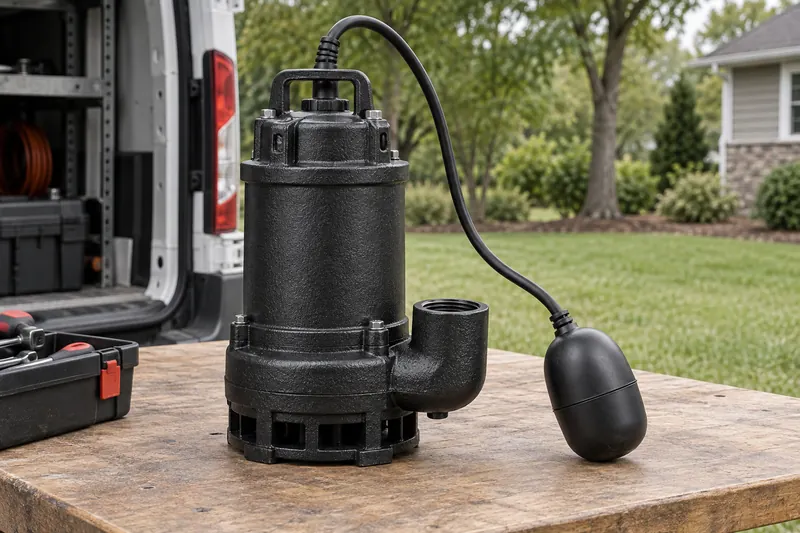
Pump repair is different from tank pumping
A septic pump moves liquid effluent from a tank or dosing chamber to the drainfield or another treatment point. Tank pumping is different: a vacuum truck removes accumulated solids and liquid from the tank.
Pumping does not repair a failed pump, and replacing a pump does not clear a full tank.
If your alarm is sounding, or if effluent is not moving as expected, the answer on this page fits. If the tank is simply due for material removal, see septic tank pumping.
| What is happening | Service that usually fits |
|---|---|
| Alarm sounds, pump hums or does not run, effluent is not moving as expected | Pump, float, control or wiring evaluation by a qualified professional. |
| Tank is full of solids, routine material removal is due, no pump alarm | Tank pumping following evaluation. |
| Slow drains, gurgling, odors or wet ground with no pump alarm | System assessment; the cause is not known until inspected. |
Record the alarm and symptoms
You do not need to test electrical parts, open a tank, or silence alarms yourself. Careful observations help a professional arrive prepared.
Write down what you noticed and when, then share it when you request service information.
- When alarm started; whether steady, intermittent, or silenced.
- System type if known: conventional, mound, aerobic, or a system using a pump or pressure distribution.
- Recent power interruption, storm, flooding, or breaker trip.
- Model or label details only if safely visible without opening equipment.
- Whether alarm sounds when water is used, or indoor fixtures drain slowly.
- Known pumping or service history, including a last pumping date you cannot confirm.
Ask about diagnostic scope
Pump, float, control, and wiring work calls for an appropriate professional with the right tools and local experience. Diagnosis generally cannot be settled remotely: a stuck float, failed control, or damaged wiring looks different on site.
Ask for the diagnostic scope in writing before work begins. If the problem may involve the tank, baffles, or drainfield lines, see septic system repair. A routine condition review is described on the septic inspection page.
| Question to ask | Why it matters |
|---|---|
| Which pump, float, control and wiring checks are included in the diagnostic visit? | Confirms whether the visit covers the mechanical and electrical parts relevant to your alarm. |
| What is charged for diagnosis, and is it credited toward the repair or replacement? | Helps you compare written quotes and understand the total scope, not just one number. |
| Will the technician confirm the pump type, tank access and any required permits before work? | Matches the service to the actual system and local requirements. |
| What will the written report or invoice state about parts, labor and any exclusions? | Leaves a record of what was evaluated and what was not. |
Replacement and ongoing maintenance
If a pump or control is beyond repair, replacement involves matching compatible components to the existing tank, basin, float arrangement, and panel. Installation requirements depend on system design and local jurisdiction. Ask what is included, what must be reused, and whether permit or inspection applies.
After repair or replacement, ask for maintenance instructions. Mechanical alternatives generally need more frequent checks than conventional systems.
Mechanical alternatives generally need more frequent checks than conventional systems. The septic maintenance guide covers ongoing care.
The septic maintenance guide covers ongoing care.