
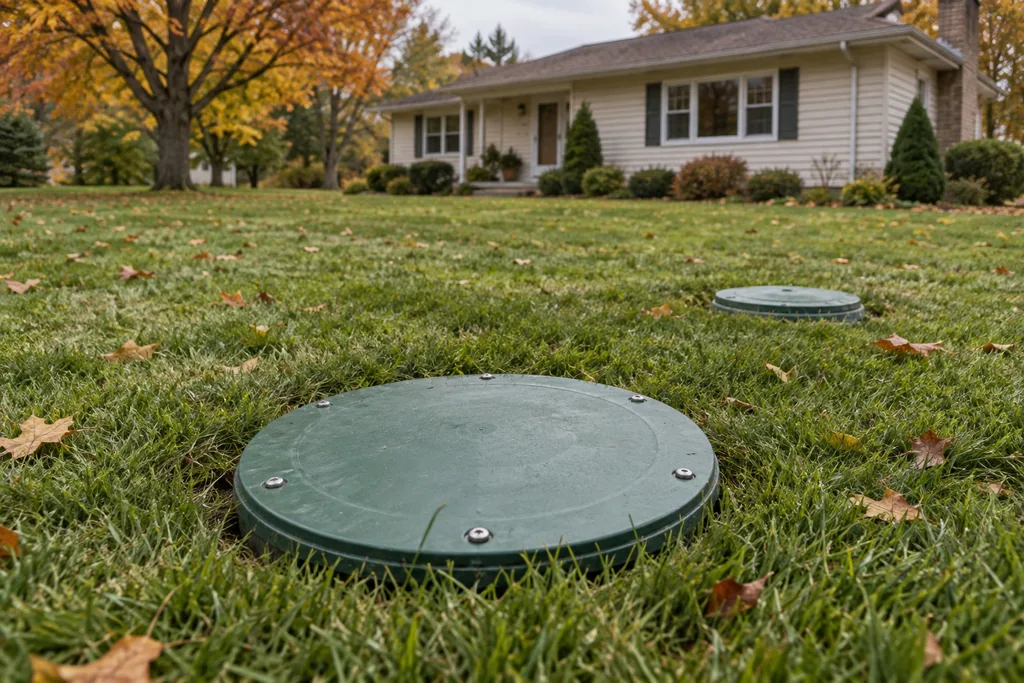
Use an interval matched to the system
EPA describes typical household tank pumping about every 3–5 years and professional inspection at least every 3 years. Adjust the pump-out interval for household use, tank size, measured solids and system type.
Mechanical alternatives with pumps or blowers generally need more frequent checks than conventional gravity systems.
For national context, EPA's routine maintenance benchmark is $250–$500; that is not an Elkhart or company pump-out quote.
Build a maintenance record
Good records let any future service visit start from facts rather than guesswork. Permit drawings and previous service records can help identify existing components, but an old record does not guarantee current condition. Keep the following in one place, and bring it up before scheduling a visit.
- Date of each inspection and the name of the person or company that did it.
- Date of each pump-out, plus any noted tank size, solids level, or liquid level.
- Observed issues, such as back-ups, gurgling, slow drains, odors, or wet ground, with the date first noticed.
- Recommendations made by a professional and the follow-up date you were given.
- Details of any repairs, risers, filters, pumps, or alarm work you have had done.
- Any questions you want answered before granting access.
Reduce strain on the system
A septic system separates solids in the tank and passes liquid effluent to a drainfield. Spreading laundry over the week, fixing running toilets and avoiding heavy-flow periods helps keep that process steady.
Keep unsuitable waste out of drains. Fats, oils, grease, wipes, paper towels, cat litter and harsh chemicals are hard on tank treatment.
Do not use additives as a shortcut. EPA says additives are not necessary for a properly operating domestic septic system and cautions some can harm performance; they do not replace assessment or maintenance.
Protect the drainfield by keeping vehicles and heavy equipment off it. Keep surface water away and avoid deep-rooted trees or shrubs where roots could reach distribution lines.
If you are unsure where the field boundaries lie, ask about septic tank locating before planning work near it.
Filters, pumps and alternative systems
Components beyond a basic tank and drainfield may carry their own service schedule. Because manufacturers differ, ask the equipment provider for the system-specific schedule.
Different system types change which checks matter, so confirm your design before planning service.
| System or part | Who confirms the schedule | What to ask about |
|---|---|---|
| Conventional tank and drainfield | The provider who inspects the tank and field | Inspection interval, solids level, next pump-out date, drainfield condition |
| Outlet filter or effluent filter | The provider servicing the system | If a filter is fitted, who cleans or replaces it, and on what basis |
| Pump, floats, and controls | The equipment provider or manufacturer | Check frequency, alarm testing, electrical safety, replacement parts |
| Alternative or mechanical system | The manufacturer and a trained provider | More frequent checks, maintenance contract terms, filter and blower service |
| Any system with an alarm | The provider servicing the equipment | What the alarm indicates, who to call, and what household action is safe |
Seasonal planning and warning signs
Cold-weather planning is mostly about access and timing. Before a service visit, ask how the site can be accessed safely and whether the tank can be located if unmarked. Do not open the tank or field yourself.
When something changes, arrange an assessment. Back-ups, gurgling, slow drains, odors and wet ground can each point to a problem needing professional evaluation; none alone proves which component failed.
Avoid contact with sewage and contact a qualified professional promptly. The guide linked below helps you note what you see before you call.