
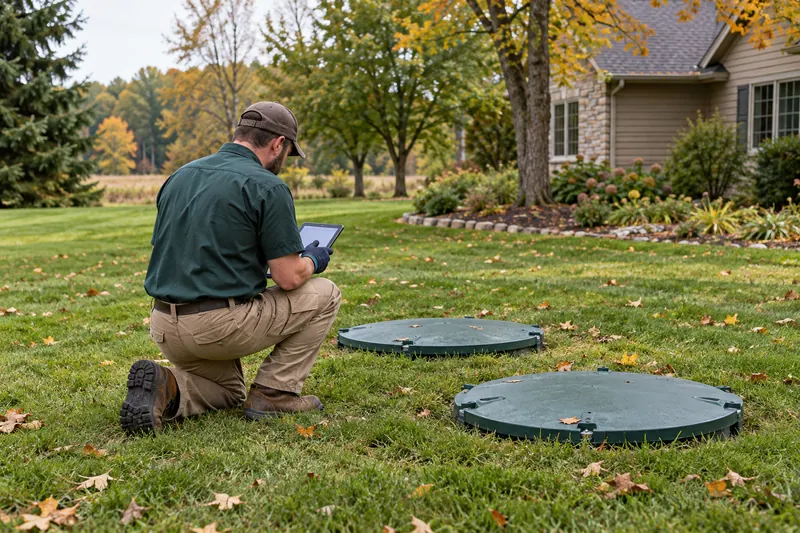
Confirm the wastewater arrangement
Start by confirming whether the property uses a septic system, a public sewer connection or another arrangement.
Ask the seller what they know, then gather records from local contacts. In Elkhart County, septic permit information and records can be requested through environmental health. Permit drawings and service records can help identify existing components, but they are not a current condition guarantee.
Ask the seller for useful records
Records can shorten the learning curve and help a professional prepare. If a record is missing, treat that gap as unknown rather than as proof of a problem or of good condition.
- Permit documents or drawings that show where the tank and drainfield are located.
- Pumping or service receipts, including dates and what was done.
- Records of any repairs, replacements, riser additions or pump work.
- Any known issues, including backups, odors, wet areas or repeated service calls.
- The date of the last pumping, if known; if it is unknown, note it as unknown.
Arrange an appropriate inspection
Before purchase, gather septic records and arrange a suitable professional evaluation. Ask about inspection scope before you agree to it. The scope may include records, tank and component condition, filters, pumps and drainfield observations. Ask what the report covers and what exclusions apply.
Confirm transaction and property requirements with the people handling the sale and the relevant authority. Use this sequence to keep the evaluation organized under time pressure.
- Decide who will arrange the inspection and who will attend or provide access.
- Confirm the professional's scope, method and what the written report will include.
- Coordinate timing with your purchase timeline and any access needs.
- Review the report for what is documented, what is excluded and what remains unclear.
- Use the findings to form follow-up questions rather than treating the report as legal advice.
Translate findings into next questions
A report can raise issues that need clarification, additional assessment or a quote. The goal is not to diagnose the system from a distance but to decide what to ask next. These are practical prompts for your own advisers, not legal conclusions.
| Finding or topic | Question to ask |
|---|---|
| Tank condition or waste level | Does this require clarification, additional assessment or a follow-up visit before purchase? |
| Drainfield observations | What does the report show, what is excluded, and what additional assessment would clarify it? |
| Pump, filter or component notes | Is service or repair needed, and what is the scope of any recommended work? |
| Missing records | Can the county or seller provide additional records, and how should the unknown records be handled? |
| Possible repair or replacement | What would a clear quote need to include so the work can be compared and planned? |
Plan care after moving in
Once you own the home, regular care and record-keeping protect your investment. EPA describes typical household tank pumping every 3-5 years and professional inspection at least every 3 years. Household use, tank size, measured solids and system type change the interval; mechanical alternatives generally need more frequent checks.
If a previous pumping date is unknown, treat that as a gap to resolve rather than proof the system is overdue.