
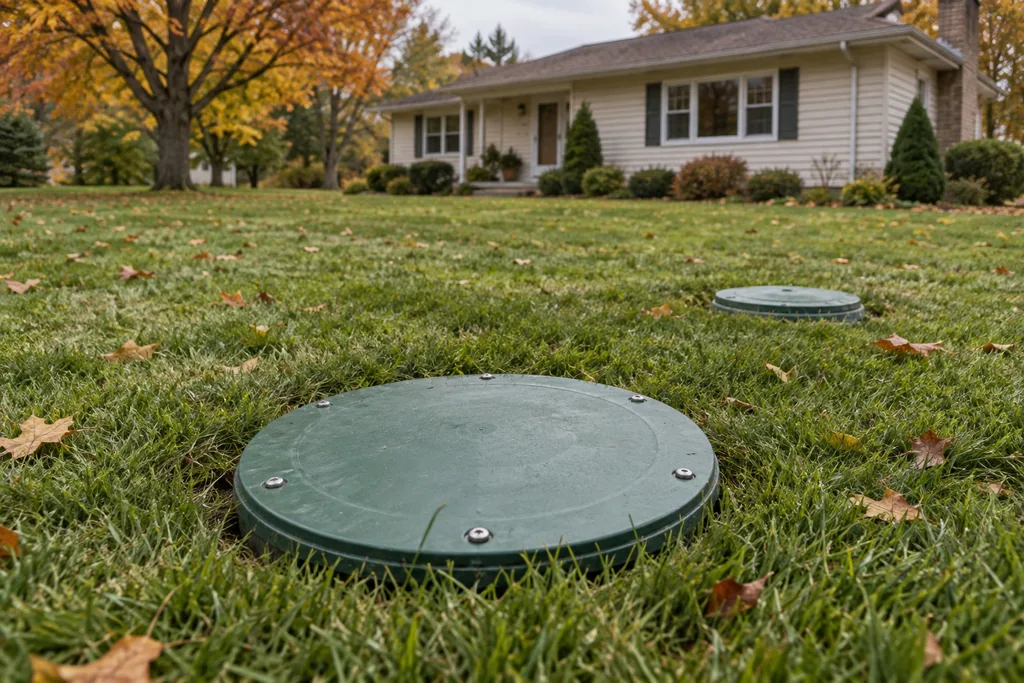
Start with records, then arrange locating
Elkhart County septic information includes a septic lookup request, so a records check is a sensible first step. Permit drawings and service records can help identify existing components and prepare for a service visit.
Treat what you find as a starting point, not proof of exact position or current condition. Drawings show what was planned, and later changes may not appear.
If the tank is still not clearly found, a locating visit is the practical next step; local providers advertise locating and riser work. County records and permit drawings are not a current condition guarantee.
Information to have ready
Having these details helps a locator and keeps the visit focused. Gather only what you can access safely; do not open lids or dig into the system yourself.
- Property address and the area you believe the tank serves.
- Old permit drawings or a copy of the county septic lookup result.
- Pumping or service records and dates, if any were kept.
- Visible clues: a lid, riser, inspection port, or ground that stays soft or green in one spot.
- Where the house sewer line leaves the building, if it can be seen without disturbing anything.
- Your purpose for locating the tank, such as pumping, an inspection or adding a riser.
Ask what the locating service covers
Locating and access are related but not the same, and a quote should say which one you are paying for. Locating finds access; a riser improves access.
| Scope | What it means | What to confirm |
|---|---|---|
| Tank position | Narrowing down where the tank sits | What method is used and what you receive afterward. |
| Lid access | Bringing the tank opening to a usable point | Whether the lid is exposed and how it is left. |
| Full system layout | Mapping tank, drainfield and lines together | Whether this is included or a separate scope. |
| Riser as part of the visit | An access improvement, not a locating step | Whether it is quoted separately from locating. |
Plan the next visit
Locating is usually a step toward something else. Match the follow-up to your reason for finding the tank.
Pumping removes accumulated tank material and is not a substitute for soil treatment.
If backups, gurgling, slow drains, odors or wet ground are involved, seek assessment rather than guessing the cause. Avoid contact with sewage.